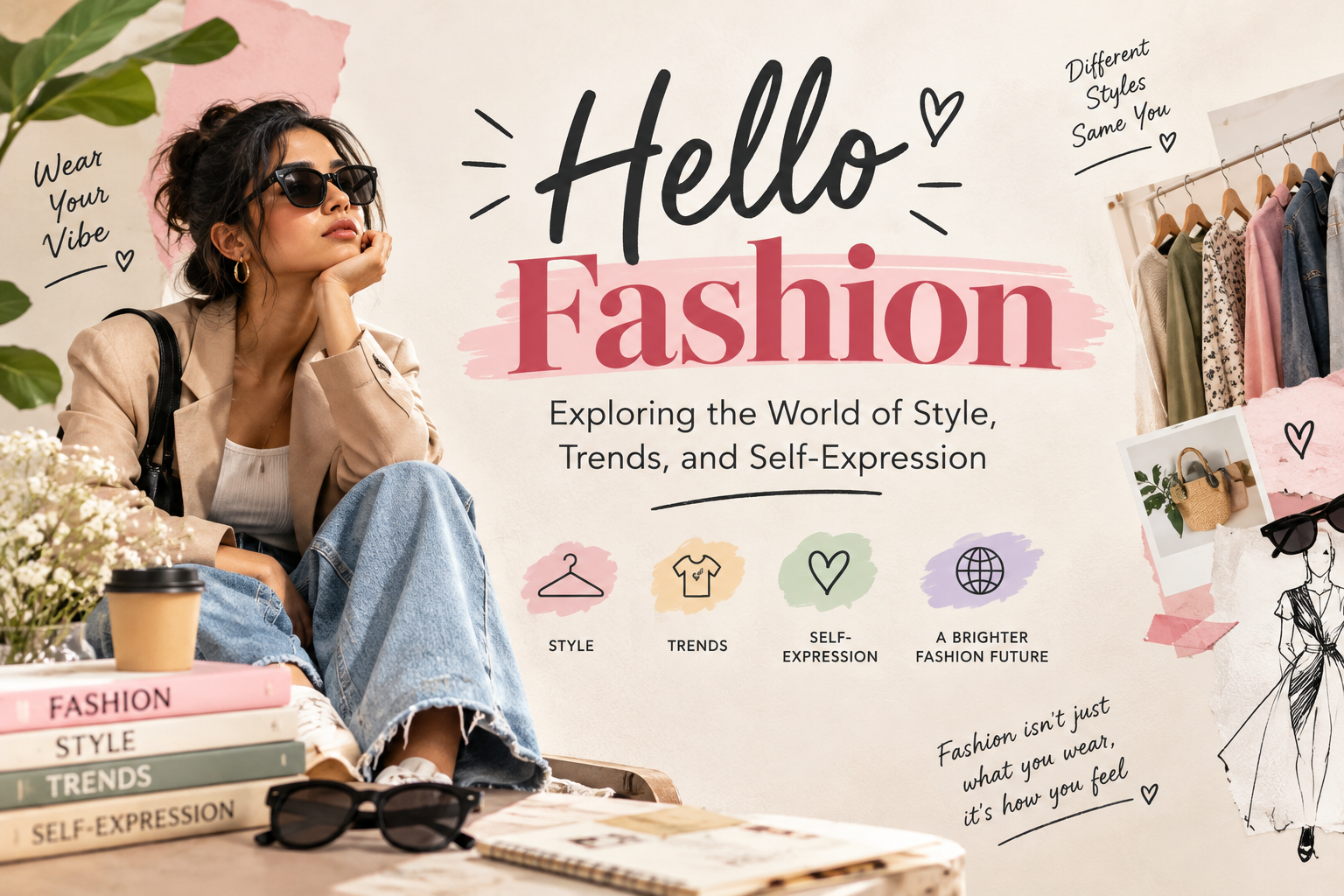
Hello Fashion
Hi, everyone! I hope you're all doing well. I'm back with another interesting and trending fashion topic called "Hello Fashion." So, without wasting any time on unnecessary details or boring you with a long introduction, let's get started!
What Is Fashion?
Fashion is a dynamic and expressive form of self-expression, culture, and art that manifests primarily through clothing, footwear, accessories, makeup, and lifestyle choices. Far beyond the functional necessity of covering the body, it serves as a visual language through which individuals communicate their identity, values, mood, and social status without speaking. It is intrinsically tied to time and place, constantly evolving as it reflects or reacts to shifting global events, economic climates, and cultural movements. Driven by both elite designers on high-fashion runways and organic subcultures on the streets, fashion is a multi-billion-dollar global industry that influences how we perceive ourselves and connect with the world around us.
Why Is Fashion Important?
Fashion is important because it serves as a primary tool for personal self-expression, boosts self-confidence and mood, and communicates cultural identity, social values, and professional status to the world. Beyond individual identity, it acts as a massive global economic driver and a platform for social change, while also fulfilling the basic human need for functional protection and comfort against the elements.
Fashion vs Style
Fashion is the collective, ever-changing industry of global trends and popular clothing dictated by designers, whereas style is your personal, timeless way of expressing your own individuality through what you wear.
How Fashion Trends Change
Fashion trends change in a continuous cycle driven by cultural shifts, media, technology, and social needs, starting with designers or cultural icons, moving to the mass market, and often returning every 20 to 30 years with fresh updates.
Fashion as Self-Expression
Fashion is a non-verbal way to communicate your personality, values, culture, and mood to the world without speaking a single word. Through the colors, fabrics, and styles you choose, your wardrobe acts as a personal canvas that tells your unique life story and shapes how people see you.
How to Find Your Personal Style
To find your personal style, start by auditing your current wardrobe to see which clothes you actually wear and feel confident in, while noting what you consistently avoid. Next, evaluate your daily lifestyle and routine to ensure your clothes are practical for how you live, work, and spend your time. Collect visual inspiration on platforms like Pinterest or Instagram to spot patterns in colors, shapes, and textures you naturally love, and try distilling your taste into three descriptive guide words. Finally, experiment with small mix-and-match combinations using your existing pieces, letting your style evolve naturally as you learn what feels authentic to you.
The Future of Fashion
The future of fashion will be defined by a shift toward hyper-sustainability and digital integration, fundamentally changing how clothes are made, sold, and worn. Driven by climate urgency and technological breakthroughs, the industry is transitioning from wasteful mass production to circular models powered by biodegradable lab-grown textiles, 3D printing, and on-demand manufacturing. Simultaneously, the rise of the digital space will blend reality with virtual expression, allowing consumers to wear digital garments in the metaverse and use augmented reality (AR) for instant virtual try-ons. Ultimately, fashion will evolve from a rigid, physical product into a dynamic, personalized service where data-driven personalization minimizes environmental waste while maximizing individual self-expression.