High Fashion vs Fast Fashion: What’s the Difference?
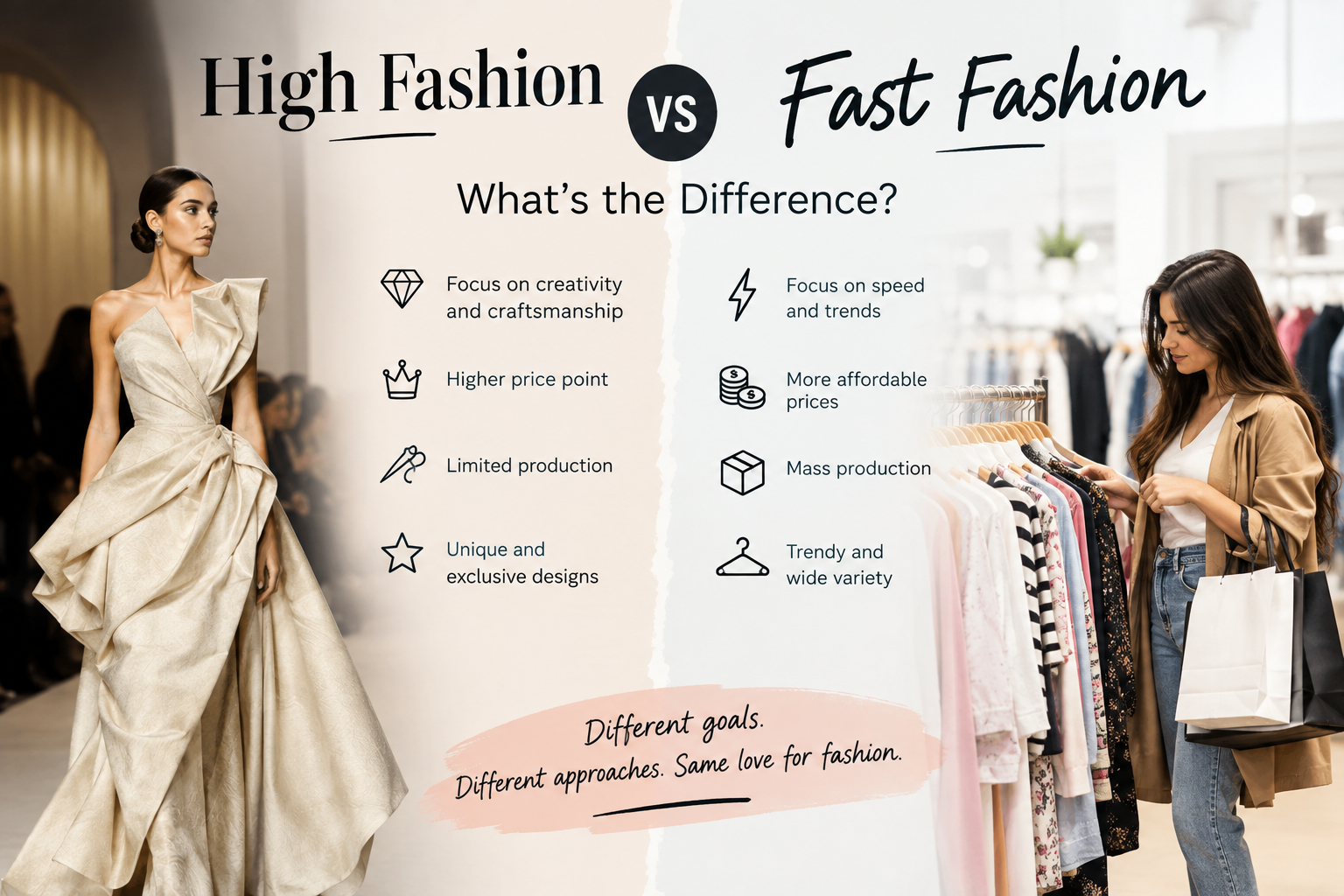
Fast Fashion vs High Fashion: Key Differences Explained
Fashion is everywhere. From luxury boutiques and fashion weeks to affordable clothing websites and social media trends, there are more ways to explore fashion than ever before.
But have you ever wondered why some clothes cost hundreds or even thousands of rupees while similar-looking pieces can be found for a much lower price? The answer often comes down to the difference between high fashion and fast fashion. Both are important parts of the fashion industry, but they work in very different ways.
Let's explore some differences between fast fashion and high fashion.
If you want to know what high fashion and fast fashion are, visit our previous blogs.
High Fashion vs Fast Fashion: The Main Difference
The biggest difference between high fashion and fast fashion is their approach to design, production, price, and exclusivity. High fashion generally focuses on creating distinctive designs and maintaining a strong luxury identity. Fast fashion focuses more on responding quickly to what customers currently want.
Think of it this way:
This is a simplified comparison. Real fashion businesses can combine different approaches, and not every brand fits perfectly into one category.
Difference in Price
Price is one of the most noticeable differences. High-fashion and luxury garments can be expensive because of factors such as high-quality materials, skilled craftsmanship, design development, limited production, and brand positioning.
Some luxury pieces are made by hand or require highly specialised techniques. The price can therefore reflect not only the material but also the amount of work and expertise involved.
Fast fashion is generally much cheaper. Its business model relies on producing clothing at scale and selling large numbers of items. This makes current trends accessible to shoppers with different budgets.
Difference in Production
Production speed is another major difference. High-fashion pieces can take a long time to develop. Designers may spend considerable time experimenting with fabrics, creating patterns, fitting garments, and perfecting small details.
Fast fashion, on the other hand, is built around speed. Once a trend is identified, companies try to move from design to production and sale quickly. This allows fast fashion brands to react to changing customer preferences.
Difference in Quality and Craftsmanship
High fashion is often associated with detailed craftsmanship and carefully selected materials. A single garment may involve specialised workers who focus on particular parts of its construction.
Fast fashion usually prioritises affordability and efficient production. This does not mean every fast-fashion item is poor quality, but durability and craftsmanship can vary significantly between products and brands.
A high-fashion garment may be designed to remain in someone's wardrobe for many years, while a fast-fashion item may be purchased mainly for a particular season or trend.
Difference in Exclusivity
Exclusivity is another important part of luxury fashion. High-fashion collections are often produced in limited quantities. Some designs may be available only to a small number of customers. This limited availability can make the product feel special.
Fast fashion follows a different model. Brands generally produce larger quantities because their goal is to make products available to many shoppers.
The Role of Trends
Both high fashion and fast fashion are connected to trends, but they interact with them differently. High-fashion designers can influence future trends by introducing new colours, silhouettes, materials, or styling ideas through fashion shows and collections. Fast-fashion companies often respond to trends that are already gaining popularity.
Social media has made this relationship even faster. A look seen on a runway, celebrity, or influencer can quickly become popular with the general public.
Environmental Impact
The environmental impact of fashion has become an important topic. Fast fashion can contribute to clothing waste because its business model encourages frequent production and consumption. When people regularly buy new clothes and quickly stop wearing older pieces, more garments can end up being discarded.
High fashion is not automatically environmentally friendly either. Luxury clothing still requires materials, manufacturing, transportation, and other resources.
The environmental impact of a fashion product depends on many factors, including the materials used, production methods, how long the garment is used, and what happens to it at the end of its life.
Which One Is Better?
There is no simple answer because high fashion and fast fashion serve different purposes. Someone may choose fast fashion because they want an affordable outfit for college, work, or a special event. Another person may prefer luxury clothing because they value craftsmanship, heritage, design, or exclusivity. The important thing is to understand what you are buying and why.
Instead of focusing only on the label or price, shoppers can consider the quality of the garment, how often they will wear it, and how long they expect it to last.
The Future of Fashion
The fashion industry is changing quickly. Consumers are becoming more interested in sustainability, quality, personal style, and transparency. At the same time, social media continues to make trends move faster.
This means both high-fashion and fast-fashion brands need to understand changing customer expectations. Digital platforms are also becoming increasingly important because customers discover new brands and products online every day.
For independent fashion brands, having an online presence can help them introduce their collections to customers beyond their local area.
Grow your fashion brand with Edgvance
If you are a fashion or lifestyle brand looking to reach a wider audience, Edgvance gives you a place to showcase your products and grow your online presence.
Related products
Subscribe to the Vanguard
Get deep dives into archive fashion and upcoming drops delivered to your radar.