What Is Fast Fashion? How It Works and How to Shop Thoughtfully
Fashion changes all the time. A dress that is popular today may disappear from social media a few months later. New colours, designs, and styles keep appearing, and many people want to try them without spending too much money. But have you ever wondered how clothing brands bring new trends to stores so quickly?
This is how fast fashion comes.
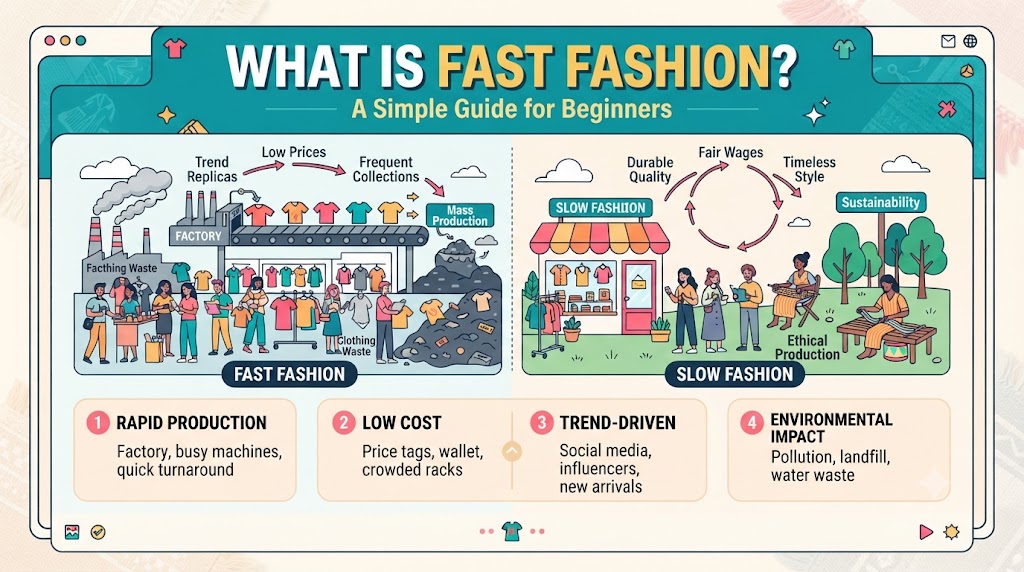
Fast fashion is a way of producing and selling clothing quickly, usually at affordable prices. Brands watch changing trends, create new designs, and bring them to customers in a short period. This makes it easier for people to enjoy current fashion without paying the high prices often associated with designer clothing.
However, fast fashion is about more than cheap and trendy clothes. It also affects the environment, workers, and the way people think about shopping.
For example, imagine that a particular type of jacket becomes popular after a celebrity or influencer wears it. People start searching for similar jackets online. A fast fashion company may notice this demand, create its own version, and put it on sale quickly.
The basic idea is simple: spot trends, produce clothing quickly, sell it at an affordable price, and move on to the next trend. This speed is one of the main features that separates fast fashion from traditional fashion.
How Fast Fashion Works
Fast fashion depends heavily on understanding what customers want. Brands monitor social media, influencers, celebrities, fashion shows, online searches, and shopping behaviour to identify popular styles.
Once a trend becomes noticeable, designers create products inspired by it. Manufacturers then produce the clothing, often in large quantities. Keeping production costs and prices relatively low helps brands attract a large number of customers.
Why Is Fast Fashion So Popular?
One major reason is price. Not everyone can spend a lot of money on clothes. Affordable fashion allows people to try different styles without making a larger financial commitment.
Another reason is variety. Fast fashion stores and websites usually offer many types of clothing, including dresses, jeans, tops, jackets, accessories, and seasonal outfits. This gives shoppers plenty of options.
What Are the Problems With Fast Fashion?
One of the biggest concerns is its environmental impact. Clothing production requires raw materials, water, energy, transportation, and packaging. Producing large amounts of clothing can put pressure on these resources. When clothes are purchased frequently and discarded quickly, the amount of textile waste can also increase.
Fast Fashion and Overconsumption
Another issue connected with fast fashion is overconsumption. Sometimes we buy something not because we need it, but because it is inexpensive, popular, or currently trending. After the excitement disappears, the item may remain unused in the wardrobe.
Fast Fashion vs Slow Fashion
Fast fashion focuses more heavily on speed, affordability, and frequent changes in trends. In reality, people do not have to choose one approach completely. Someone can buy affordable clothing while still trying to reduce unnecessary purchases and take better care of what they already own.
How Can You Shop More Thoughtfully?
You do not have to stop enjoying fashion to shop more responsibly. Before buying something, ask yourself a few simple questions:
- Do I really need this?
- How often will I wear it?
- Can I combine it with clothes I already have?
- Will I still like it when the current trend disappears?
You can also repair damaged clothes instead of immediately replacing them. Donating or reselling clothes you no longer wear can give them another life. Buying second-hand is another option for people who want to reduce unnecessary new purchases.
Final Thoughts
Fast fashion has changed the way people buy and experience clothing. It has made fashion trends more affordable, accessible, and quick to reach shoppers. At the same time, its focus on rapid production and frequent consumption has raised important questions about waste, resources, and working conditions.
Understanding fast fashion does not mean you have to stop enjoying trends or buying affordable clothes. It simply means becoming more aware of your choices.
Fast fashion has made trendy clothing more affordable and accessible, but it also reminds us that the fashion industry is constantly changing. For brands, keeping up with these changes means finding new ways to reach customers and stay visible online.
Platforms like Edgvance give fashion brands another place to showcase their products and connect with potential customers. If you are a fashion brand looking to expand your online presence, you can list your products on Edgvance and introduce your collection to a wider audience.