Will E-Commerce Websites Decline in the Future? Why Brands Still Need Online Marketplaces
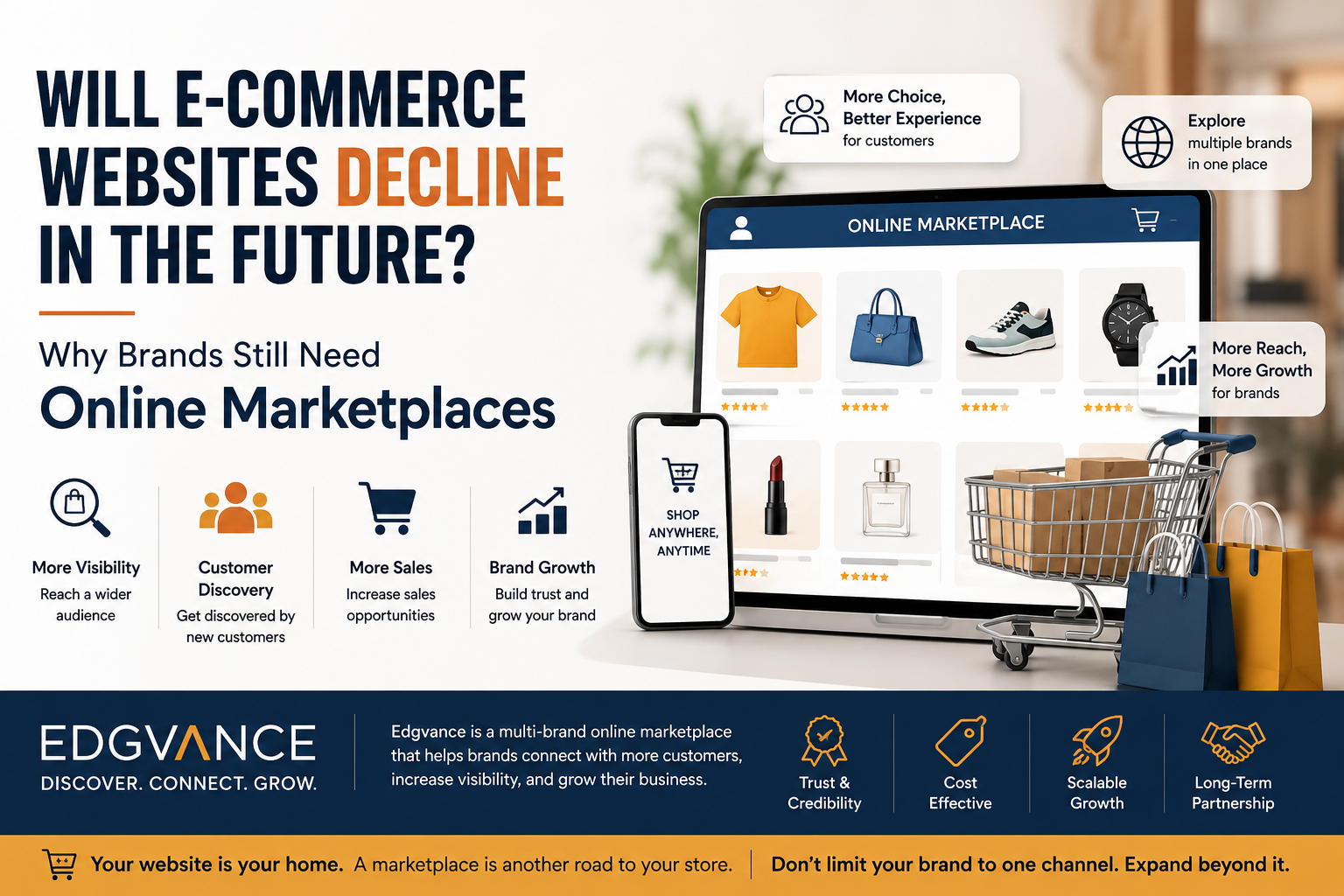
Will E-Commerce Websites Go Down in the Future?
"Why should my brand join an e-commerce website when I already have my own website?" This is a question many brands are asking today. As more businesses launch their own websites and build audiences through Instagram, Facebook, YouTube, and other social media platforms, some people believe that e-commerce marketplaces may eventually lose their importance. But is that really going to happen? The answer is: not necessarily.
The e-commerce industry is evolving, but that doesn't mean online marketplaces are becoming irrelevant. In fact, marketplaces can continue to play an important role in helping brands reach new customers, increase visibility, and grow beyond their existing audience. Let's understand why.
Your Website and an E-Commerce Marketplace Serve Different Purposes
Having your own website is extremely important for a brand. Your website gives you control over your:
- Brand identity
- Product presentation
- Customer experience
- Content
- Customer relationships
- Marketing strategy
But your website primarily attracts people who already know your brand or discover it through your marketing efforts. An e-commerce marketplace works differently. A customer may visit a marketplace without knowing which brand they want to buy from. They may simply be looking for:
- A new dress
- Shoes
- Beauty products
- Accessories
- Home products
- Gifts
- Trending products
They can discover multiple brands and compare products in one place. That's the major advantage of a multi-brand e-commerce marketplace.
Customers Love to Explore
Think about your own shopping behaviour. When you want to buy something online, do you always visit one specific brand's website? Probably not. Sometimes you search for a product, compare different brands, check prices, read reviews, compare styles, and then decide what to purchase.
This is where e-commerce marketplaces become valuable. Instead of visiting ten different websites to compare ten different products, customers can discover multiple options on one platform.
For customers, marketplaces provide discovery and convenience. For brands, marketplaces provide another opportunity to be discovered.
Why Do Big Brands Sell Through Marketplaces?
One of the strongest examples is Lakmé. Lakmé has its own website and established brand presence, but its products are also available through major e-commerce marketplaces. Why? Because having your own website and being present on marketplaces are not mutually exclusive strategies.
A brand doesn't necessarily have to choose between:
Own Website OR Marketplace
It can use:
Own Website + Marketplace + Social Media + Other Digital Channels
Each channel can serve a different purpose. The brand's own website can strengthen its identity and direct relationship with customers, while marketplaces can provide additional product discovery and reach.
E-Commerce Is Not Just About Selling — It's About Discovery
One of the biggest advantages of an online marketplace is product discovery. Imagine a customer searching for a black dress. They may not have a particular brand in mind. On a multi-brand marketplace, they can discover several brands offering different designs, prices, sizes, and styles.
This creates an opportunity for smaller and emerging brands too. A customer who has never heard of your brand could discover your product simply because it appears alongside products they were already searching for. That's something a brand's individual website may find harder to achieve without additional marketing.
Social Media Is Powerful — But It Has Limitations
Social media is an excellent tool for brand awareness. Instagram Reels, YouTube Shorts, Facebook, Pinterest, and other platforms can help brands attract attention and build communities. But social media attention doesn't automatically mean a customer is ready to purchase.
A customer may discover a product on social media and then have to:
An e-commerce marketplace can make the shopping journey more convenient by bringing multiple products and brands together in a dedicated shopping environment. That's why social media and e-commerce should not necessarily compete with each other. They can work together.
Why Should a Brand Join Edgvance?
This is where Edgvance can provide an additional opportunity for growing brands. Edgvance is designed to bring brands and customers together through an online marketplace. By joining Edgvance, brands can potentially benefit from:
1. Additional Online Visibility
Your brand gets another digital channel through which customers can discover your products.
2. Multi-Brand Product Discovery
Customers can explore different products and brands in one place, increasing opportunities for product discovery.
3. Reach Beyond Your Audience
Your own website mainly depends on your brand traffic and marketing efforts. A marketplace gives your products another opportunity to reach shoppers.
4. Build Brand Awareness
When customers repeatedly see your products across digital channels, it can help increase brand familiarity and awareness.
5. Keep Your Own Website
Joining a marketplace doesn't mean abandoning your website. It remains your brand's home, while Edgvance acts as another discovery channel.
6. Focus on Your Products
Instead of building an entirely new marketplace infrastructure yourself, use an existing marketplace environment to reach potential customers.
Your Website Is Your Home. A Marketplace Is Another Road to Your Store.
Think about it this way:
- Your website = Your brand's own store.
- Social media = Your brand's promotion and community channel.
- E-commerce marketplace = Another place where customers can discover and shop your products.
Why limit your brand to one channel when customers are already shopping across multiple channels? The future of e-commerce isn't necessarily about one platform replacing another. It's about creating an interconnected digital shopping ecosystem where brands can reach customers through multiple channels.
Will E-Commerce Disappear?
The more realistic answer is that e-commerce will continue to evolve. Shopping habits, technology, artificial intelligence, social commerce, marketplaces, websites, and mobile shopping will continue changing. Some platforms may disappear. New platforms will emerge. Customer expectations will change.
But the fundamental need for convenient online product discovery and purchasing is unlikely to simply disappear.
The question for brands shouldn't only be:
"Do I need an e-commerce marketplace if I already have my own website?"
A better question is:
"Can an additional marketplace help my brand reach customers I might not reach through my own website?"
For many brands, the answer can be yes.
Why Brands Should Consider Edgvance
If you're a brand looking to expand your online presence, Edgvance can be another channel in your digital strategy. You don't have to choose between your own website and Edgvance. You can use both.
Your website builds your brand identity. Your social media builds awareness and engagement. And an e-commerce marketplace can help customers discover your products alongside other brands. That's the power of having a multi-channel digital presence.
Don't replace your website. Expand beyond it.
Ready to Take Your Brand to More Customers?
Your brand deserves to be discovered. If you're looking for an additional platform to showcase your products, connect with online shoppers, and expand your digital presence, consider joining Edgvance.
Join Edgvance and give your brand another opportunity to be discovered.
Related products
Subscribe to the Vanguard
Get deep dives into archive fashion and upcoming drops delivered to your radar.